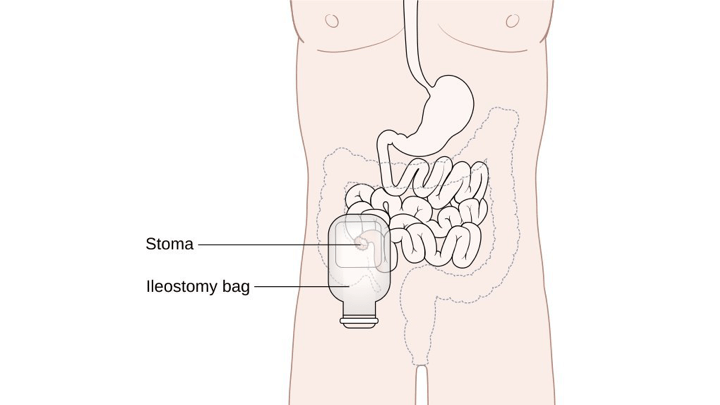
An ostomy made on the surface of your abdomen to bring out a part of the small intestine is known as an ileostomy. The opening made from the small intestine is called the stoma, and it expels feces out of the body without letting them pass through the diseased colon. Reasons you may need an ileostomy may include Crohn’s disease, colorectal cancer, and ulcerative colitis.
An ileostomy can be a conventional ileostomy, a loop ileostomy, or a continent ileostomy. A conventional ileostomy is when the surgeon separates the ileum from the colon and brings the end of the ileum through an incision in the abdominal wall. This type of ileostomy is mostly permanent.
A loop ileostomy is a temporary ileostomy. The surgeon creates it by making an incision on the side of the ileum and brings this open side through an incision in the belly. The surgeon then sutures the edges of the opening that leads to the rectum and creates a stoma of the other opening to allow bodily wastes to leave the body prematurely.
A continent ileostomy uses a reservoir made of the end of the small intestine. This internal reservoir stores waste materials until you insert a catheter through a hole in the abdomen to draw the waste out of this reservoir.
What to expect after surgery
You will need to stay hospitalized until the initial postoperative recovery phase is over. You can walk in the hospital to initiate bowel movements and strengthen your abdominal muscles. Your nurse will teach you how to take care of your ileostomy by running you through the process of ileostomy pouch management. Upon seeing that you are doing well with the recovery, your surgical staff will allow you to go home. You will for a few days before leaving the hospital.
When to seek emergency care
You will need to visit your doctor immediately if you notice the following complications.
- Your legs or arms feel warm, tender, and painful.
- You have persistent vomiting.
- The color of your stoma has turned gray or black.
- Your stoma is not passing out bowel contents.
Postoperative self-care
- Be sure not to lift anything heavier than ten pounds for at least the first four weeks after surgery.
- Walk around in the house to prevent blood clotting.
- Check your stoma for redness, drainage, or swelling.
- Avoid driving until your doctor approves it.
Stay in touch with an ostomy specialist
You can get more information regarding how to care for your stoma and overall bowel health from an ostomy expert. That individual will suggest you the right type of ostomy pouches that you can use. He or she will also teach you how to care for the skin around the stoma.
 Ostomy Health